
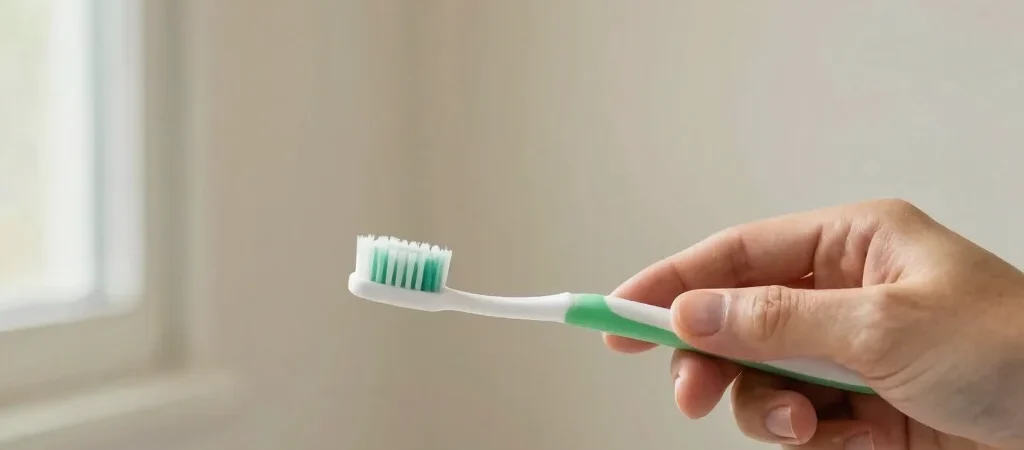
It is easy to treat brushing like scrubbing a stubborn spot on a countertop. But your gums and teeth benefit from steady, gentle cleaning—not force. A softer touch can help you focus on the places a rushed brush often misses.
Start With the Brush
Choose a soft-bristled toothbrush and hold it comfortably, without gripping it as if you were trying to erase a mark. Place the bristles near the gumline and use small, gentle movements rather than long, hard strokes. If the bristles flatten against your teeth, ease up.
Give Every Surface Time
Brush the outside, inside, and chewing surfaces of your teeth, moving through your mouth in a consistent order so no area gets skipped. The backs of the front teeth can be easy to overlook; turning the brush vertically may help you reach them. Follow the directions on your toothpaste and toothbrush, and aim for a complete routine rather than a forceful one.
Make Room for Between Teeth
A toothbrush cannot clean every tight space between teeth, so add floss or another between-teeth cleaner that works for you. Move gently rather than snapping floss against the gums. If brushing regularly causes bleeding or discomfort, or you are unsure which tools suit your mouth, bring it up at a dental appointment.